The Sow Who Chose Her Own Spot
posted on
September 5, 2026
This year we farrowed our first certified organic piglets here on the farm. We learned a great deal, and one of the clearest lessons came from a sow who made a decision for us.
Two Ways to Give Birth
We started farrowing at the end of March, when several mamas were ready at once and the weather could still turn to snow. So we set up a permanent area around the barn, with easy access to feed and water and real shelter from the cold.
It worked. But it meant those piglets spent all eight weeks with their mother in the same place.
On our farm we rely on the ecological benefits of animals moving. Our pigs are rotated to fresh ground at least once a week, and our chickens move every single day. Animals are not in the same spot from one week, or sometimes one day, to the next. That movement is how we manage parasites and hygiene without reaching for chemical solutions, which organic certification does not allow and which we would not want to use anyway.
The spring farrowing area was the one place on the farm where that principle did not apply.
What Happened in August
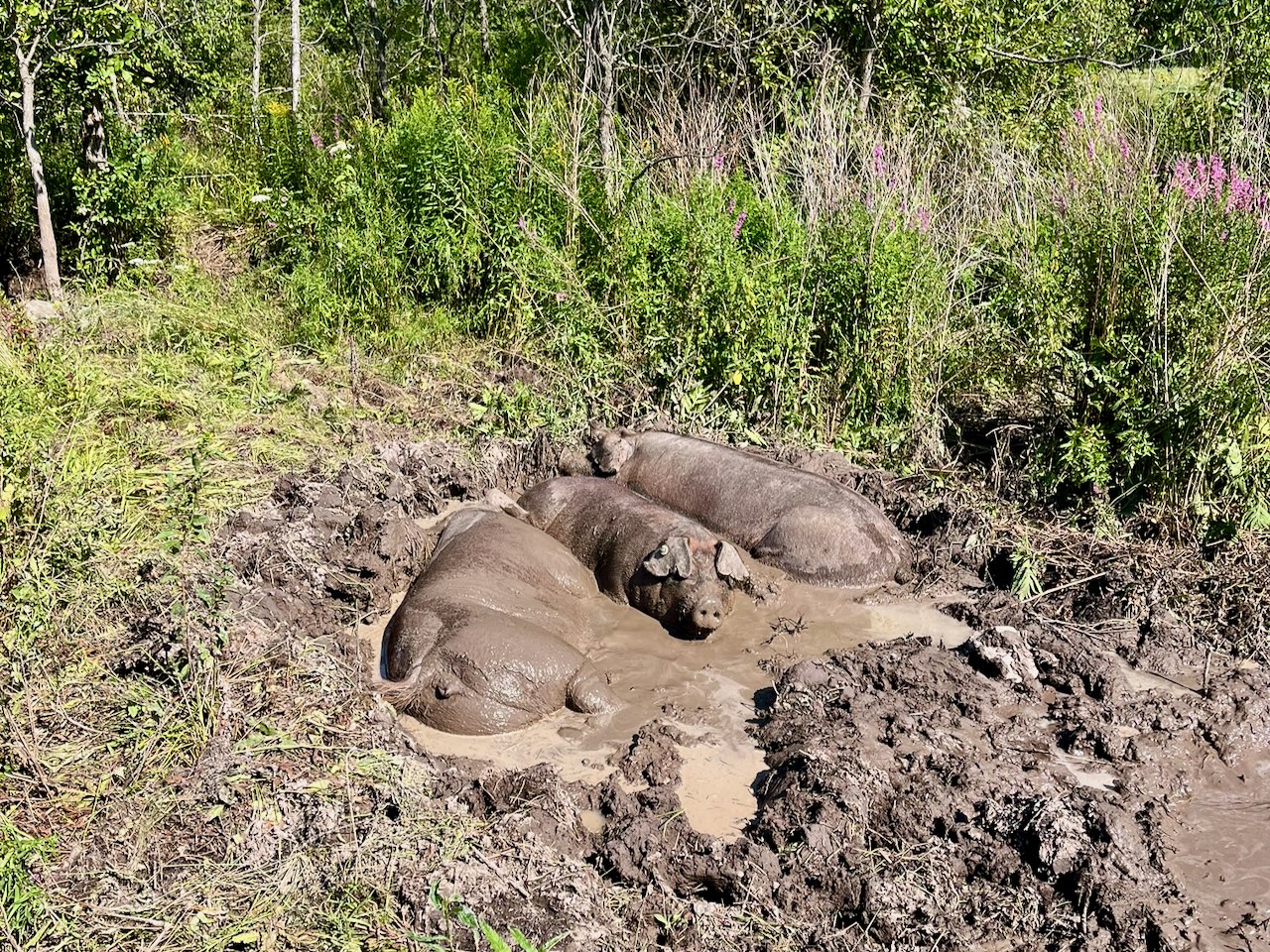
Our last sow of the summer was due during a run of thunderstorms. She had been out with the other dry sows for a month, moving with them like any other animal.
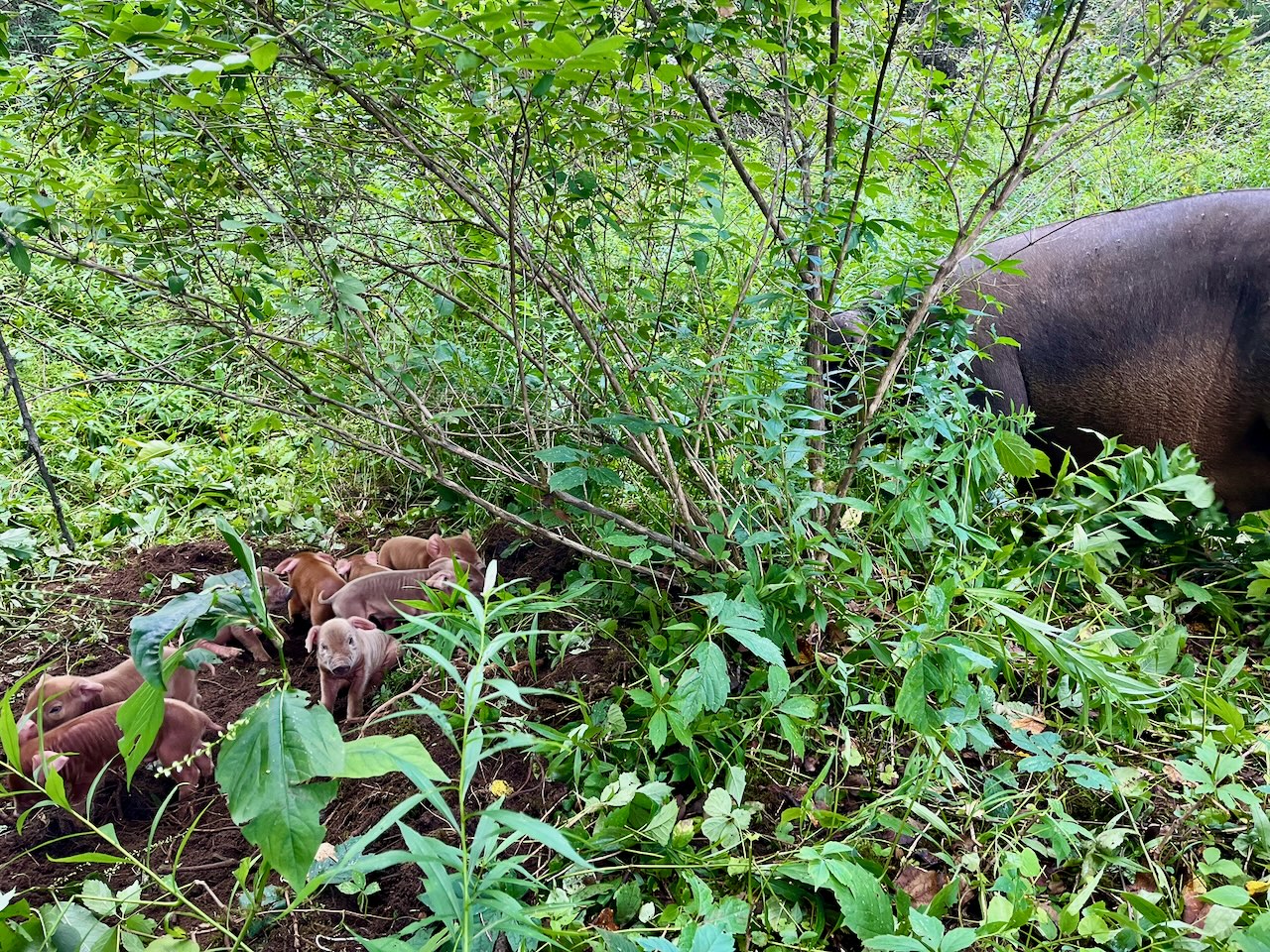
When her time came, she tucked herself away, found her privacy, and had her babies. At some point during the storm, unbeknownst to us, she wandered across a fence into a new area entirely. She had made herself private quarters.
We found her the next morning in the brush around an old wild apple tree, with eight piglets finding their way around her belly for the first time.
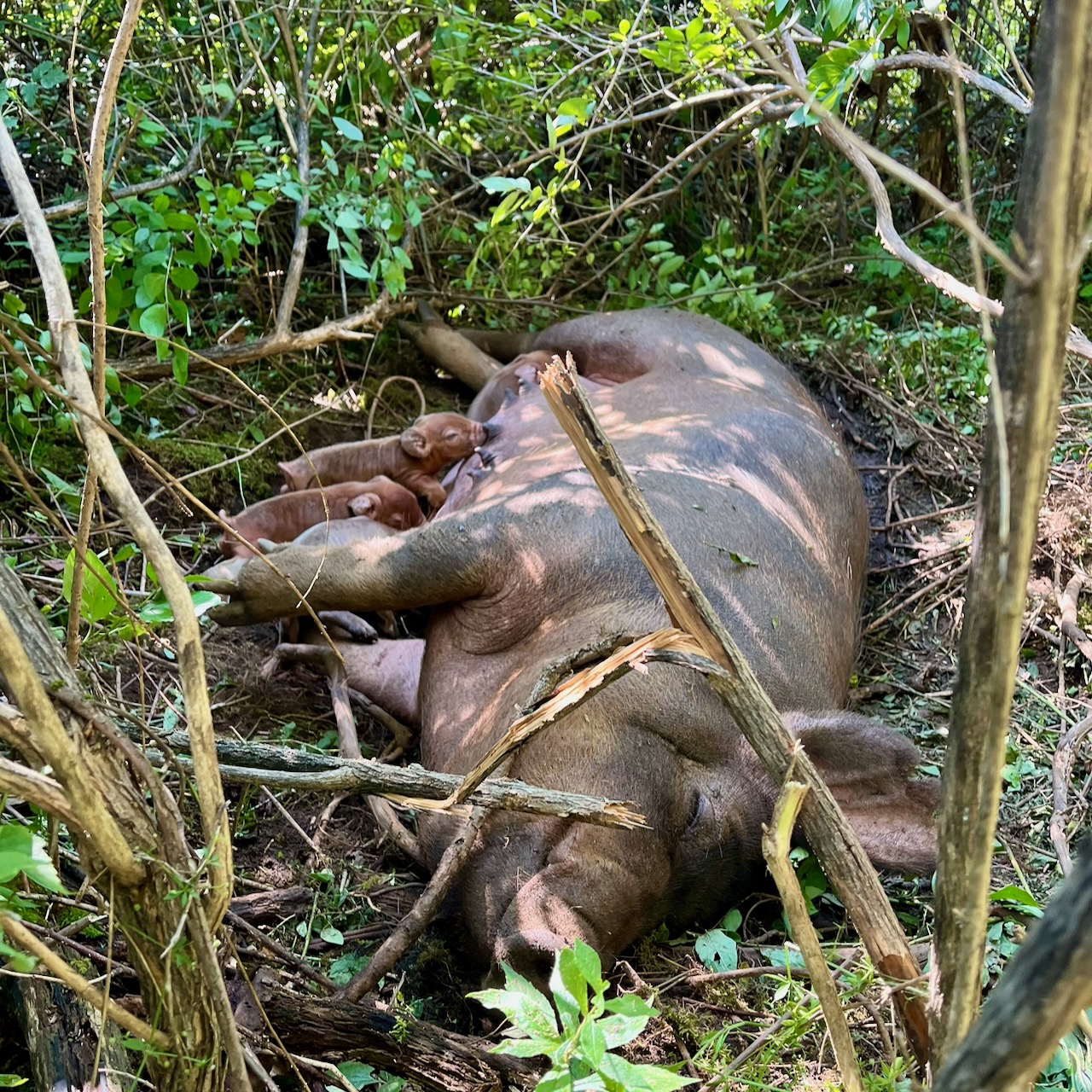
Those piglets were born onto soil that has not seen a pig in at least a generation.
What We Learned
Since then they have moved on pasture continuously, always on fresh ground.
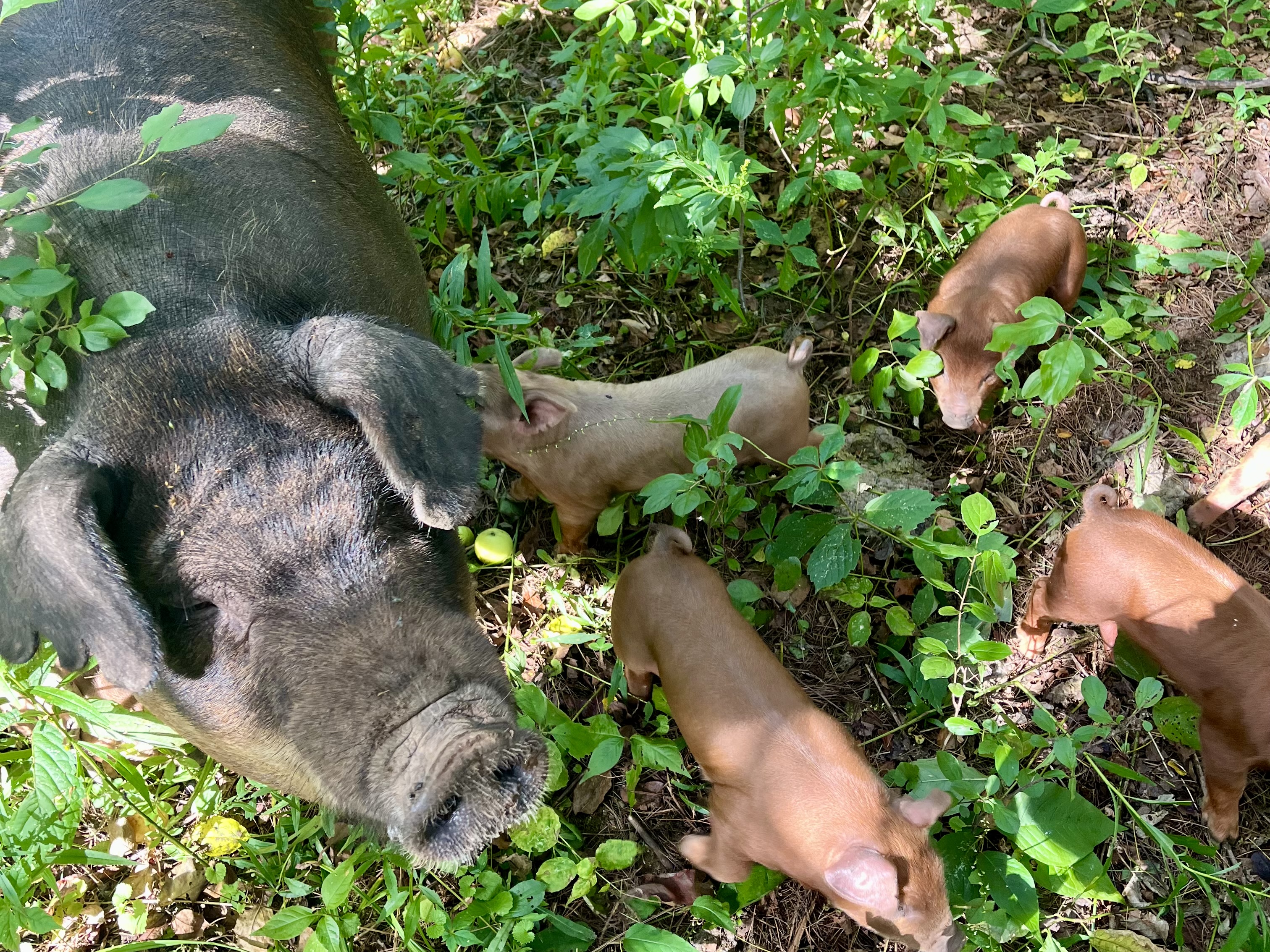
Here is the part that struck the whole farm team: despite our best efforts with fresh bedding and keeping the spring area clean, none of it compares to what weekly moves on pasture do for hygiene and for keeping piglets healthy and vigorous. The pasture does a better job than we can.
We are an organic farm, so these kinds of strategies are the tools we have. That constraint keeps pushing us toward answers that turn out to be better, not just permissible.
Racey and I are now asking what elements of this we can build into next year's farrowing, when the weather in March will still be what it is. We do not have the answer yet. But a sow walking across a fence in a thunderstorm made a fairly persuasive argument.
You can read more about how we raise our animals here.